ServicesDual Tank Water Filtration
Dual Tank Water Filtration in Agoura Hills
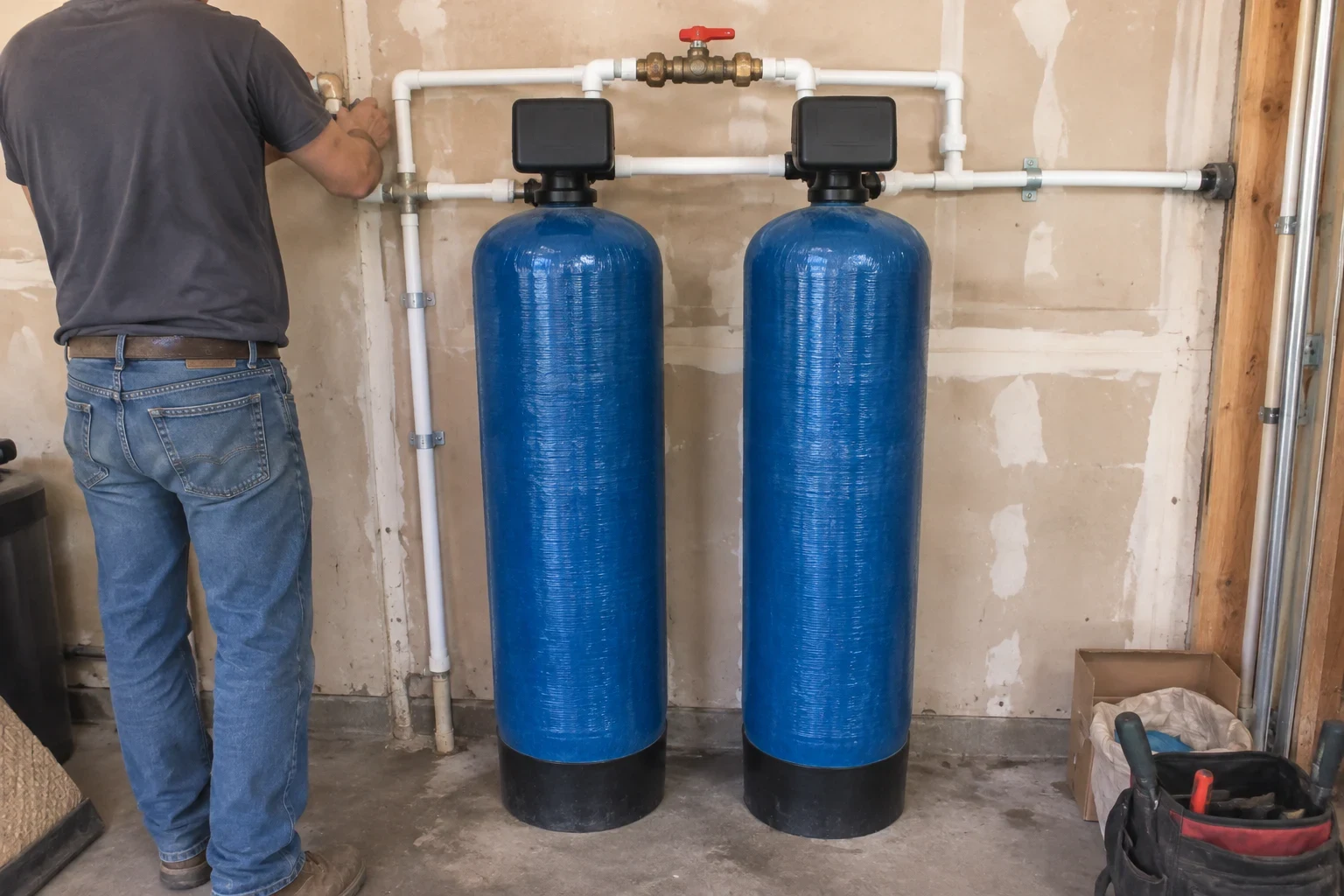
With a dual tank system, water is treated at the main line before it branches off, so every faucet, shower and appliance in your home receives the same filtered supply. We fit each system to the plumbing in front of us, including the tired valves and mixed pipe older houses tend to conceal.
Two tanks, each with its own job
A dual tank system splits filtration into stages. The first tank catches sediment and takes the bulk of the chlorine taste and odor. The second tank polishes what is left, so the media in each one lasts longer and the water at your tap stays consistent from one month to the next.
Because the tanks sit on the main line, the installation matters as much as the equipment. In houses that have been through a few owners, we often find an original shutoff that no longer closes fully, a section of galvanized pipe spliced into copper, or a pressure regulator well past its working life. We look for these things before we cut in, and we tell you plainly what we found.
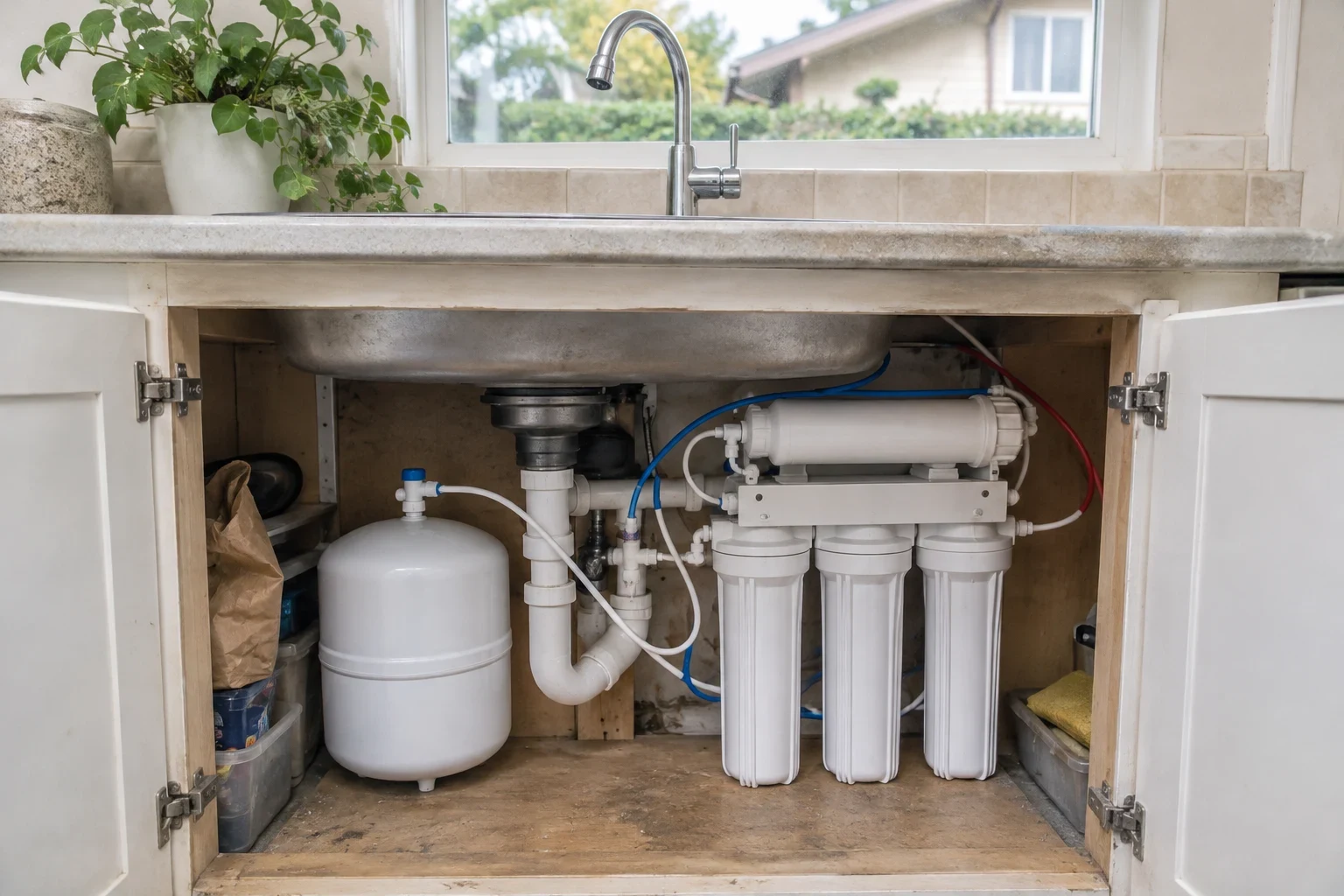
If you mainly want better drinking and cooking water at one sink, an under-sink Reverse Osmosis system may suit you better. We are happy to explain the difference on the phone.
What the installation includes
Matched tanks and media
We size the tanks to the number of bathrooms and people in your home. Undersized tanks wear out quickly and can cost you water pressure.
A proper bypass loop
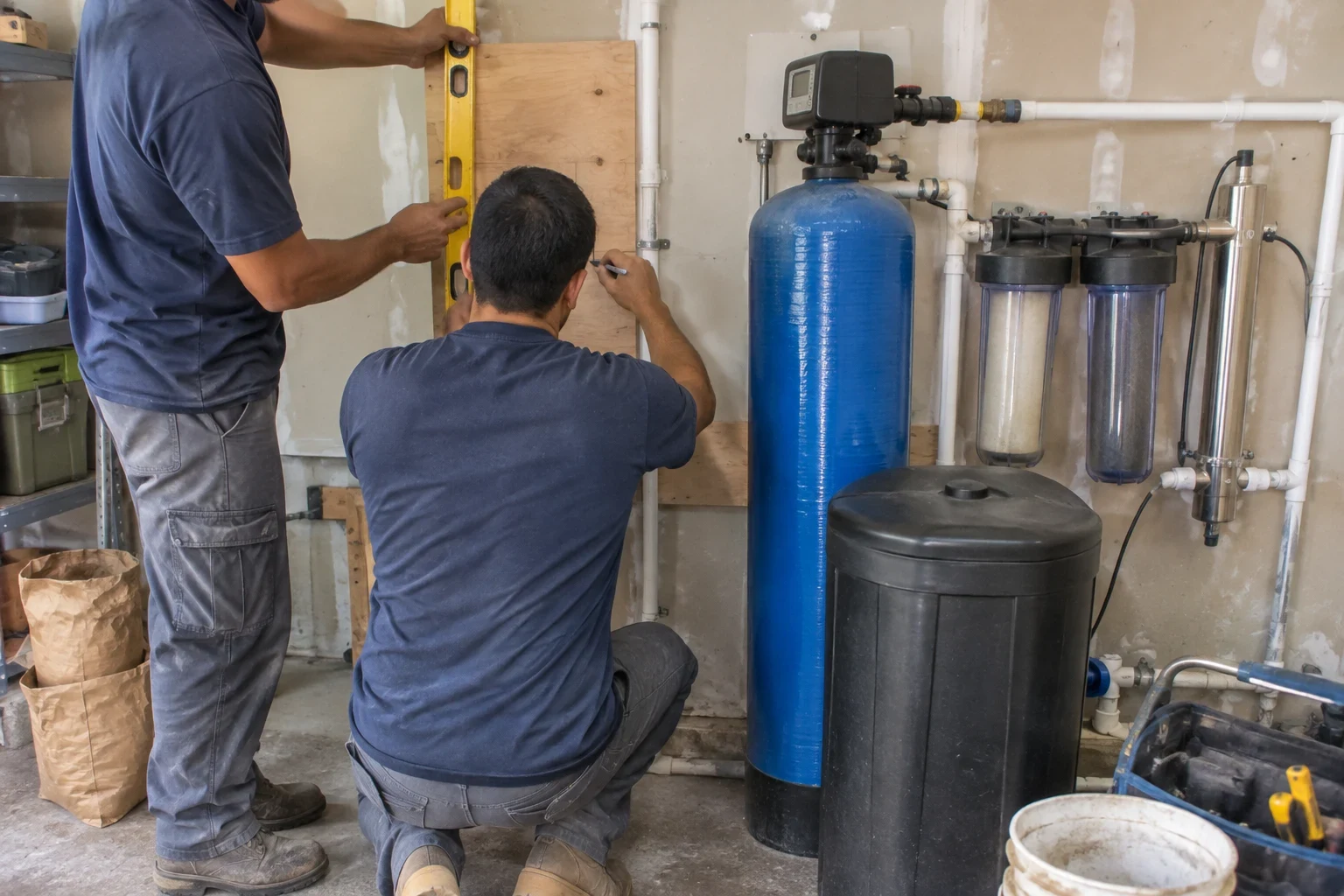
Every system gets bypass valves, so you can isolate the tanks for service without shutting off water to the house.
Careful connections to older pipe
Where new copper meets old galvanized steel, we use dielectric fittings to limit corrosion at the joint. If cutting into metal pipe interrupts the electrical ground path, we add a bonding jumper across the system.
Startup and flushing
New media releases fine dust, so we flush each tank to drain until the water runs clear before we open it to your fixtures.
A clean finish
Tanks are set level on a stable base, lines are strapped neatly, and we take our packaging and pipe offcuts with us.
When a dual tank system is a good fit
- Chlorine odor in the shower
- With a carbon stage on the main line, the pool smell is gone from every tap, not just the kitchen.
- Grit in showerheads and aerators
- Aging pipe sheds rust and scale over the years. Fine particles in faucet screens show that sediment needs to be filtered before it reaches your fixtures.
- A single tank that cannot keep up
- When your current filter burns through media much faster than it should, dividing the load between two tanks usually helps.
- Film and spots on fixtures and glassware
- The residue water leaves as it dries is common in Southern California homes. Better filtration before the water reaches your taps can cut down the film you clean off every week.
- A repipe or remodel coming up
- If the walls or main line will already be open, that is a good time to plan where the tanks and bypass will go.
Step by step
- 1
It begins with a call
Let us know what you dislike about the water, whether taste, odor or grit, plus how many people live there and about how old the house is. We then explain what a dual tank system would solve and what it would not.
- 2
A look at the main line
We locate the incoming supply, try the shutoff and regulator, and take note of earlier repairs or spots where the pipe material changes. Then we pick a place with room for both tanks, a drain for the backwash and an outlet for the control valve.
- 3
Install day
With the water off, we plumb the bypass and tanks, complete the connections and put back the ground path anywhere the pipe calls for it. In most homes the water is off for just part of the day, and floors and walkways stay covered the whole time.
- 4
Flush, inspect and walk-through
We send the new media to drain until the water runs clear, bring the system up to full pressure and check each joint for weeping. Before we go, you learn how the bypass works, what upkeep looks like and roughly when the media will be due for replacement.
What affects the price
Install is free, and we cover that cost. The rest depends on the equipment your house needs and the state of the plumbing we tie into. We go over each item on the phone and again at your home, so nothing unexpected shows up on install day.
- Media and tank size
- Bigger households call for bigger tanks and more media. The carbon type and any extra sediment stage also change the price.
- State of the tie-in point
- A worn shutoff, a failing pressure regulator or corroded galvanized pipe at the main may have to be replaced before the tanks can be safely installed.
- Where the tanks go and access
- A garage wall close to the main line is simple. A narrow side yard or a long run back to the supply needs more pipe and more time.
- Drain and outlet nearby
- The control valve needs a drain close by for backwashing, plus an outlet. If either is far away, adding it expands the job.
What people ask about dual tank systems
- What is the point of two tanks instead of a single large one?
- Every tank carries the media meant for its own stage, which keeps sediment from clogging the carbon that handles taste and odor. As a result the media tends to last longer and the water stays more even from one service visit to the next.
- Will my water pressure drop with two tanks?
- If the tanks are the right size, you should barely notice any change. Pressure problems tend to come from undersized tanks or a worn regulator ahead of the system, which is why we check the regulator before the install.
- My house still has old galvanized pipe. Can you still put one in?
- Usually, yes. We make the connection with dielectric fittings and look over the pipe around the tie-in. If a stretch is too corroded to take a sound joint, we show you before we replace it.
- What upkeep does the system ask of me?
- The control valve runs its own backwash on a schedule, so there is no daily task for you. Over time the media gets used up, and we tell you what to look for and roughly how long it should last with your household's water use.
- What sets this apart from reverse osmosis?
- A dual tank system filters every gallon that comes into the house. Reverse Osmosis is fitted at a single sink for the water you drink and cook with. Plenty of homes have both, and we can help you work out which one your home needs.
Plan a system around your plumbing
Share a little about the house, how many people live there and anything you have noticed at the tap. From there we can describe the system we would fit, where the tanks would sit and whether any older plumbing needs attention first.