ServicesWhole Home Water Filtration
Whole Home Water Filtration in Agoura Hills
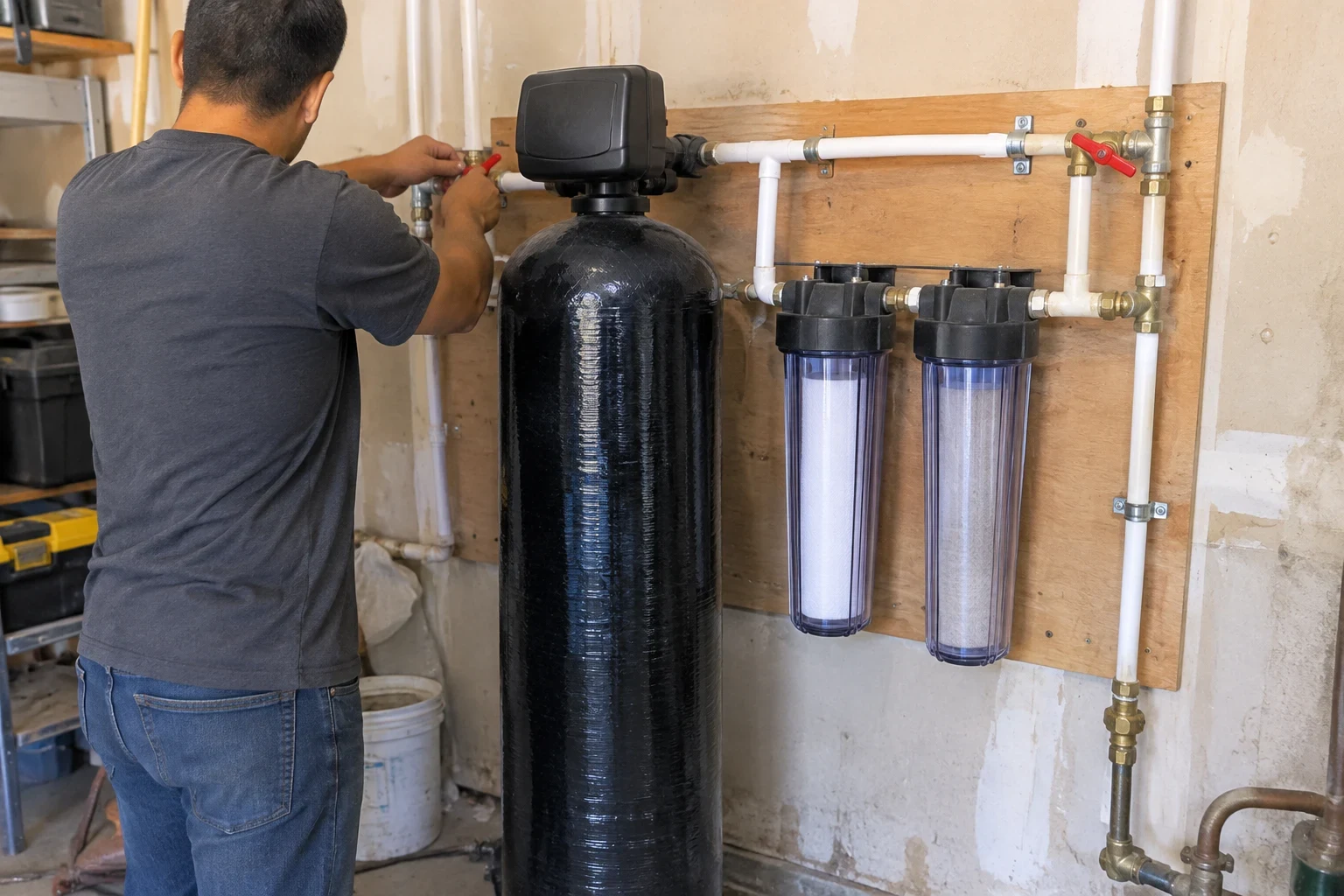
A whole home system sits where water enters your home and filters it before it reaches any tap, shower or appliance. We plan each install around the pipe you actually have, including older lines, earlier repairs and valves that have not been turned in years.
Filtered water at every fixture in the house
Most filters treat water at one spot, like a pitcher or a cartridge beneath the kitchen sink. A whole home system treats it where it comes into the house. Water goes through it a single time, and every fixture after it gets the benefit: your shower, the washer, the bathroom sinks and the ice maker.
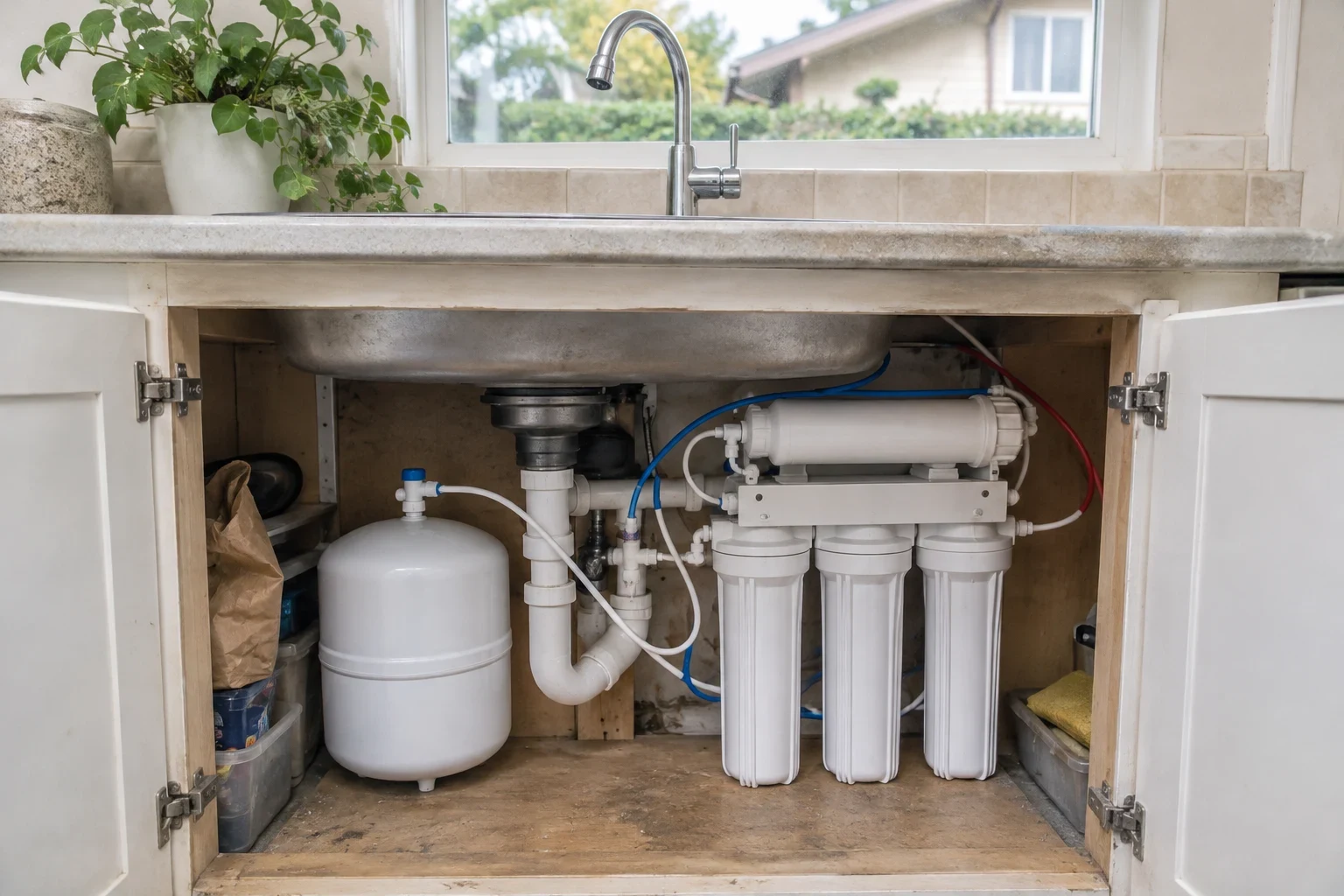
Choose it when the problem shows up all over the house, like a chlorine odor in the shower or fine grit collecting in aerators. If what you care about most is drinking and cooking water, our Reverse Osmosis page describes a smaller system made for that job.
Older houses call for extra attention. The main may be galvanized steel tied into newer copper, an earlier repair may have relocated the shutoff, or the pressure regulator may date to when the house was built. We review all of it before recommending a system, so the install works with your plumbing instead of against it.
What the work includes
A look at your main line
We locate where water enters your home, check the pipe material and note any earlier repairs. That tells us where the system can sit and how it will tie in.
A system sized to your flow
Tank and media are chosen for how many people live in your home, how many baths you have and when the heaviest use happens. A system that is too small loses pressure when two showers run at once, so we size for the way you actually live.
Bypass and shutoff valves
We build a bypass loop with its own valves. You can take the system offline for service without cutting water to the whole house.
Careful joins to older pipe
Where new copper meets old galvanized steel, we use proper transition fittings to limit corrosion at the joint. If an existing valve is seized or weeping, we point it out before we touch it.
Cleanup and a walkthrough
We flush the system, check every joint for leaks and leave the space the way we found it. Then we show you the bypass and explain what upkeep looks like.
When a whole home system is worth it
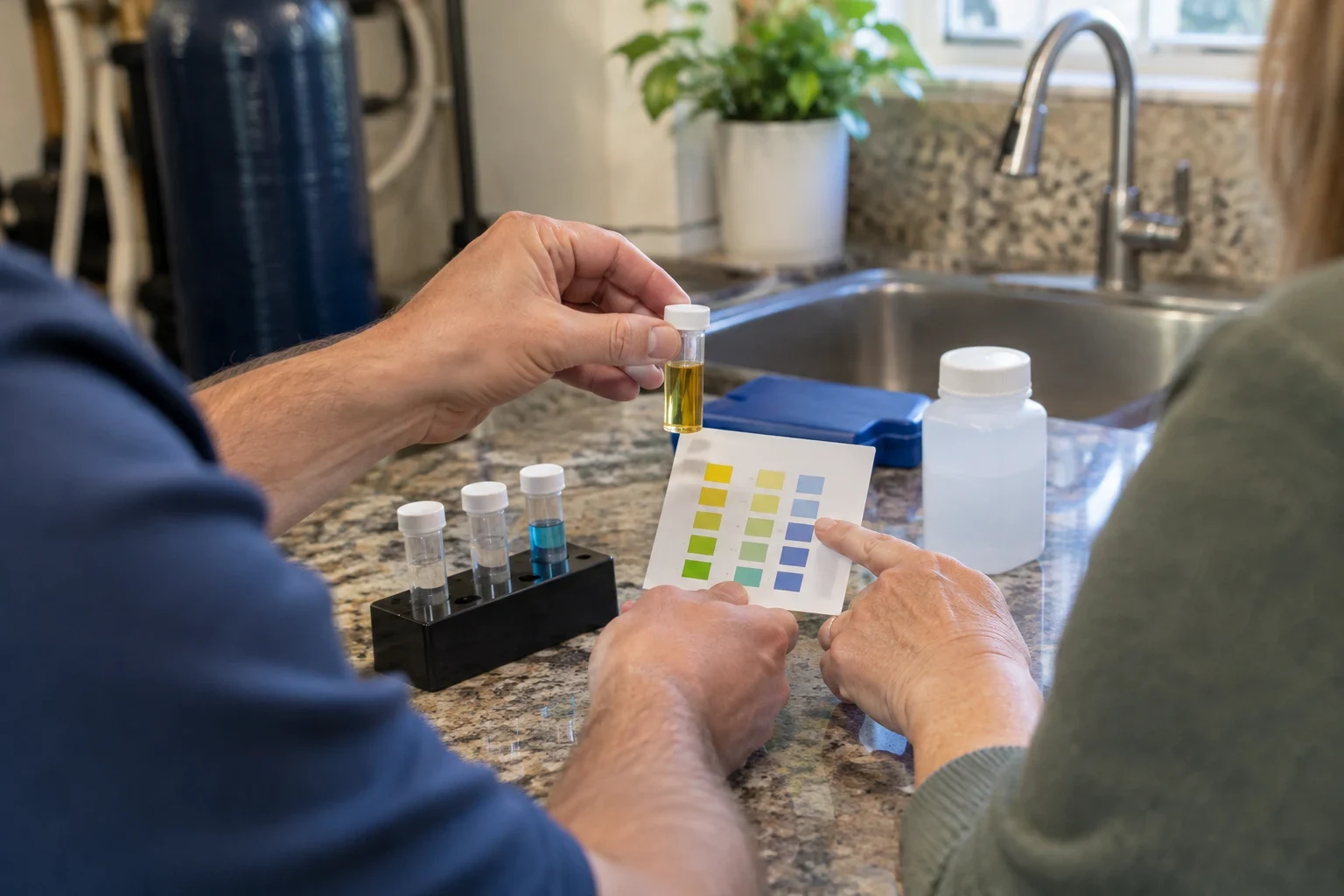
- A chlorine odor while showering
- Treated city water often has a clear chlorine smell, worst in a hot shower with the door closed. A filter at the sink does nothing about it.
- Grit in showerheads and aerators
- Fine particles in faucet screens usually come from aging pipe within the house. A filter at the entry stops the sediment before it travels through the plumbing.
- Brown water after a shutoff or repair
- Old galvanized pipe can shed rust when the flow changes. If you have to run the taps until they clear after every repair, the pipe deserves a closer look.
- Too many single-tap filters
- When you are swapping cartridges in three spots and still notice taste or odor at other taps, a single system at the entry is easier to maintain.
What to expect from start to finish
- 1
A call to begin
Tell us what you have seen or smelled in your water and a little about the house: its rough age, where the main comes in and what plumbing work has happened over time. We will be straight about what a whole home system can and cannot fix.
- 2
A visit to your home
We inspect where the water enters, along with the pipe and valves, then show you where the system would sit and how it would tie in. Your quote comes before anything goes on the schedule.
- 3
The install
Floors get protected and nearby surfaces covered, then we shut the main and plumb in the system along with its bypass. The water will be off for part of the day, and we give you notice beforehand so you can fill a pot or wrap up a load of laundry.
- 4
Flushing, testing and handoff
The new media is flushed, joints are pressure-checked and we open several fixtures to confirm good flow. Before we head out, you learn how to bypass the system and when filters need changing.
What goes into the price
Every main line is different, so we price a system only after seeing yours. Install is free (we cover the cost), so what remains is the system and any extra parts your plumbing requires. We explain each item before you make any decision.
- Size of the system and media
- Bigger homes with more bathrooms need a larger tank and more media to keep pressure steady.
- State of the pipe you have
- Corroded galvanized runs, stuck shutoffs or a worn pressure regulator may need work so the new connection holds. We show you what we find, and the decision is yours.
- Where the main is and how we reach it
- A main entering through an open garage is an easier job than one hidden behind finished walls or along a tight side yard.
- Added filter stages
- If older pipe releases a lot of sediment, a pre-filter in front of the main tank may be the better setup.
Questions about whole home filtration
- Will a whole home system lower my water pressure?
- When the tank is matched to your home, you should not feel a difference during normal use. Weak flow after an install usually traces back to a system that is too small or a cartridge left in too long. If your pressure is already low from old pipe or an aging regulator, we say so before any work begins.
- Can it go on older galvanized plumbing?
- In most homes, yes. We fit transition fittings where new and old pipe meet and check the surrounding sections for corrosion. If a stretch of pipe looks close to the end of its life, we tell you plainly rather than tie into it.
- Do I still need a filter at the kitchen sink?
- Plenty of people find the whole home system is enough on its own. Others add reverse osmosis at the kitchen for drinking and cooking water. The two pair well, and we can explain how they differ by phone.
- How often does the system need service?
- That depends on the system, how much water you use and how much sediment your pipes give off. Pre-filter cartridges are swapped more often than the main media. We go over the schedule with you on install day.
- My home is on a private well. Is this the right system?
- Well water usually calls for a different setup. Our Well Water Filtration page covers that, and we are happy to talk it over on a call.
Start with your main line
Share a bit about your house and what you have noticed in your water. We will describe how a whole home system would connect to your plumbing and what the job would take.