ServicesReverse Osmosis
Reverse Osmosis in Agoura Hills
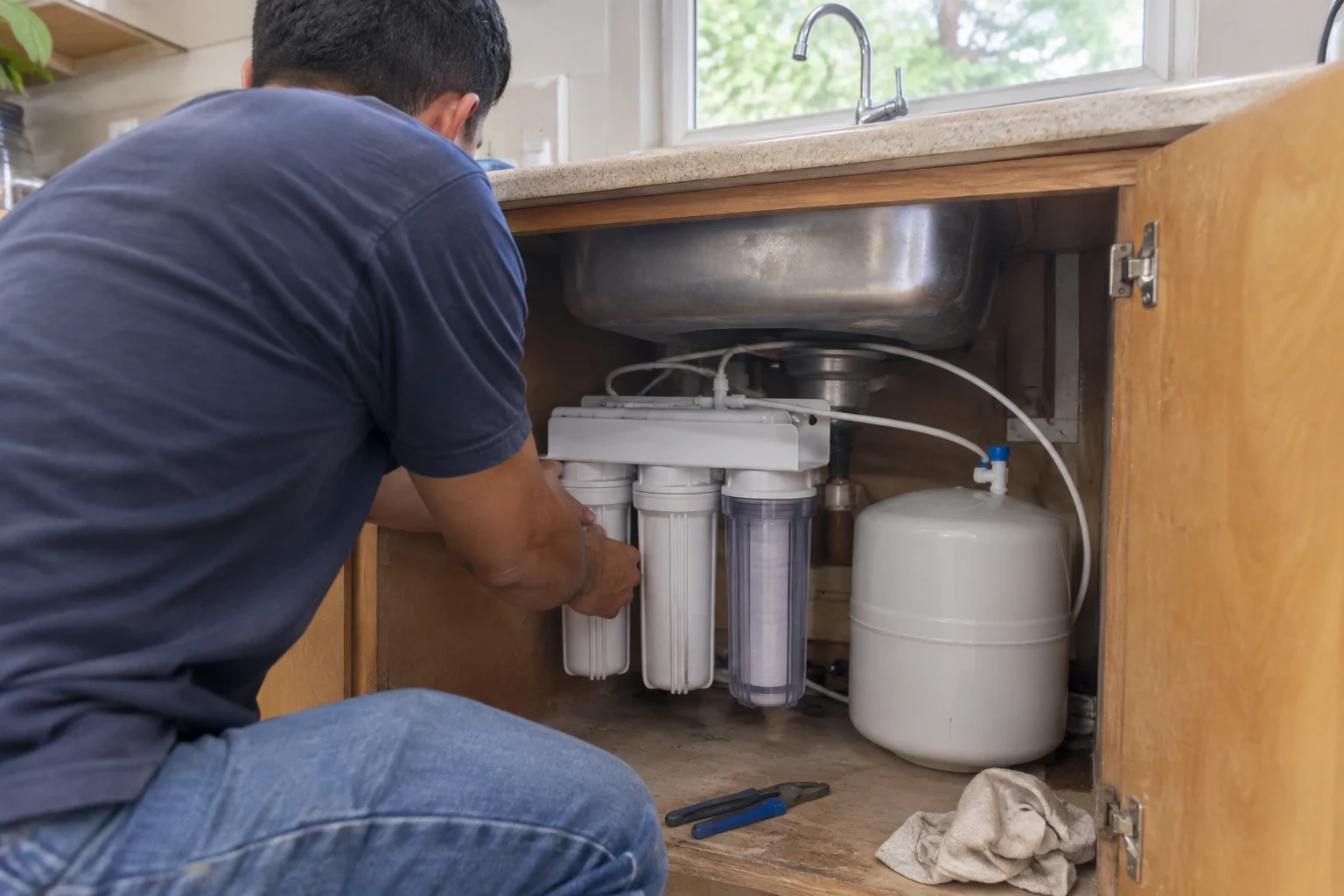
Our under-sink reverse osmosis systems put filtered drinking and cooking water at its own small faucet in your kitchen. We check the shutoff, the drain and the cabinet floor first, since kitchens that have seen a few remodels seldom look like the diagram in the manual.
Filtered water from one dedicated tap
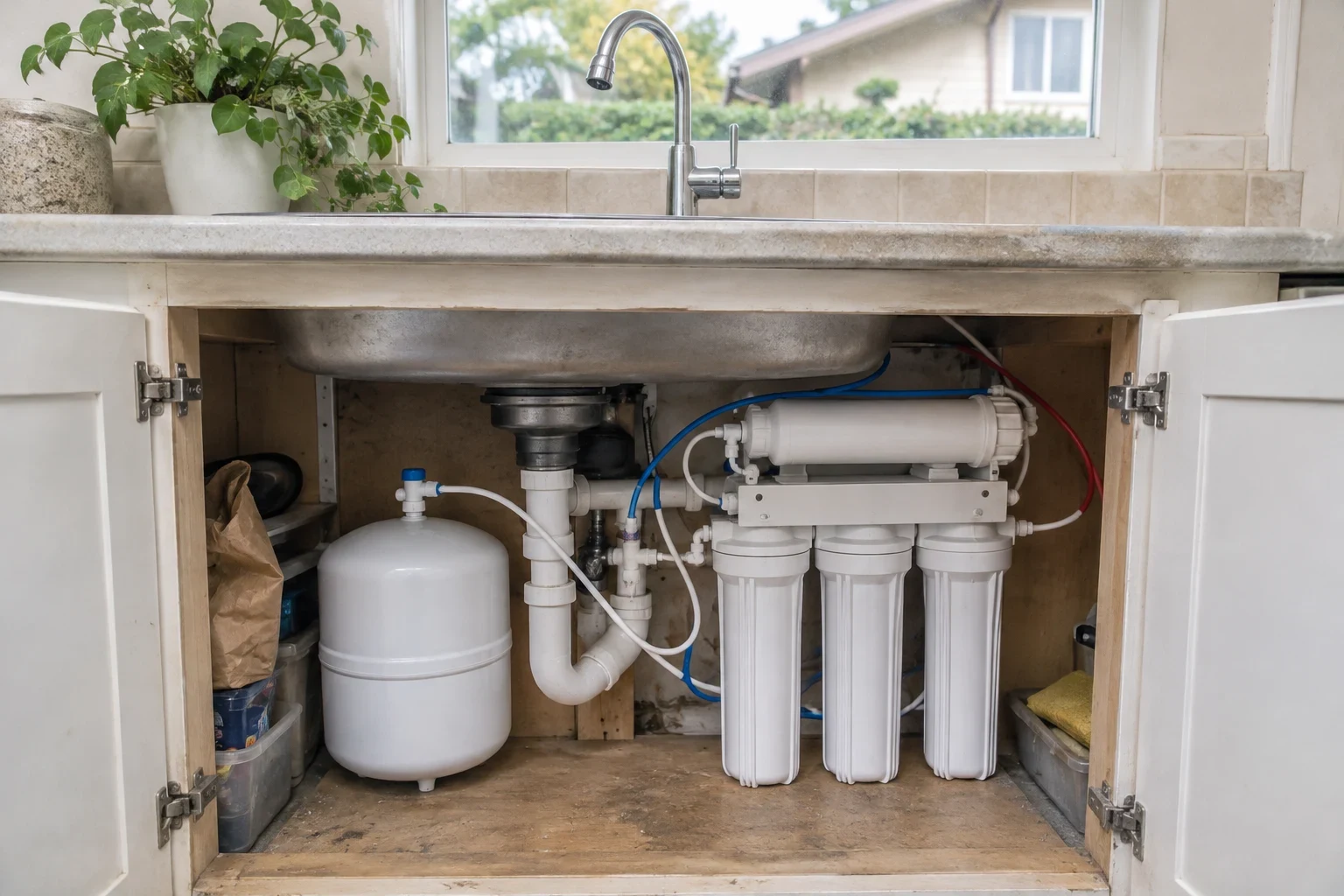
Reverse osmosis forces water through an extremely fine membrane, with carbon filters on either side. What reaches your glass has much less chlorine taste, fewer dissolved minerals and lower levels of dissolved metals such as lead, which tends to come from aging fixtures and old solder rather than the supply. Treated water is held in a compact tank and runs from a separate faucet next to your kitchen tap.
Choose it when the concern is the water you drink and cook with. If you want every tap in your home treated, our city water filtration and dual tank water filtration systems cover the whole house.
Plenty of kitchens around Agoura Hills have been updated more than once, which can leave an original brass valve, a repaired drain or faded water marks on the cabinet floor. We work around those details so the system sits neatly and the cabinet stays dry.
What we include
Checking the plumbing you have
Before anything is mounted, we test the cold shutoff, look over the drain and inspect the cabinet floor. If an older valve will not seal, we say so and discuss replacing it rather than trusting the new system to a worn part.
Filter stages and tank
Sediment and carbon prefilters guard the membrane, and a last carbon stage cleans up the taste. We place the tank on a level, stable spot and leave room for the things you keep under the sink.
Its own faucet
The faucet goes into a spare sink opening or a new hole. On stone, quartz or older tile we drill patiently with the correct bit to protect the surface.
A tidy drain tie-in
The waste line connects above the trap and is routed away from the disposal and dishwasher hose.
Fridge or ice maker line, if wanted
We can run filtered water to your refrigerator, checking the path for sharp bends and pinch points.
Pressure test and handover
We flush the system and inspect each fitting while it is under pressure. Then we point out the filter housings and the shutoff so you know how to reach them later.
When reverse osmosis is a good idea
- Bottled water is a regular purchase
- If hauling cases home is part of every week, a filtered tap at the kitchen sink does away with the lifting and the plastic.
- Coffee or tea tastes of chlorine
- City water often has a light pool smell that is easiest to notice in hot drinks. The carbon stages take it out.
- Chalky film on glasses and kettles
- Spots and scale come from dissolved solids in the water. Reverse osmosis strips most of them from your drinking water.
- An older home with its first plumbing
- Aging fixtures, brass valves and solder joints can leave trace metals in water that sits in the lines. A membrane at the tap adds another layer of reduction right where you drink.
- Ice that is cloudy or tastes strange
- When the ice maker turns out stale-tasting cubes, running its line from the system usually fixes it.
What install day looks like
- 1
A phone call first
We find out about your sink, your countertop, any disposal and whether a fridge line is wanted, so the right parts come with us.
- 2
Covering the work area
Together we empty the cabinet, then we put down a mat and protect the counter around the faucet spot before any drilling.
- 3
Mounting and hooking up
A typical install runs a few hours. We hang the filter housing, place the tank, connect the supply and drain, and neaten the tubing so it stays easy to get to.
- 4
Flush and final check
Following the manufacturer's directions, we drain off the first tank of water. Then we recheck each connection and leave the cabinet dry and clean.
What changes the cost
Installation is free since we cover it, so what you pay comes down mostly to the system you choose and any work your existing plumbing needs first. We go over every line with you on the phone before a visit is set, so the numbers are clear ahead of time.
- The system you pick
- Extra stages, a bigger membrane, a tankless model or a mineral stage all shift the price. We size the unit to the amount of water your household really drinks.
- Finish on the faucet
- Polished chrome is the standard choice. Brushed nickel, matte black or oil-rubbed bronze to match your other fixtures adds a little to the cost.
- Your under-sink valve and drain
- A shutoff that no longer closes or a drain pipe thinned by age may need replacing beforehand so the new connections hold.
- Running a line to the refrigerator
- Supplying an ice maker or fridge dispenser means extra tubing and labor. A refrigerator across the kitchen takes more time to reach than one next to the sink.
What people ask about reverse osmosis
- Will a system fit if I have a garbage disposal?
- Usually, yes. The filter bracket goes on a side wall of the cabinet and the tank sits in a back corner clear of the disposal. In a very cramped cabinet, a compact or tankless model tends to work better.
- Is some water sent to the drain?
- Yes. The membrane relies on a constant flow to rinse off what it blocks, and that water exits through the drain connection. Current models waste much less than the older ones many people know, and we go over the ratio for your chosen model before you commit.
- Is drilling a faucet hole in granite or quartz possible?
- Yes. We drill slowly with a water-cooled diamond core bit for a clean edge. Often an unused sprayer or soap dispenser hole can hold the faucet, so no new hole is needed.
- How often do the filters need changing?
- Prefilters are usually swapped around once a year, and the membrane lasts several years depending on your water use. The change is quick, and we show you how during the install so you can do it on your own.
- Does the water end up tasting flat?
- Many people describe it as clean and light. If you like a rounder taste, a mineral stage puts a little calcium and magnesium back after the membrane.
Let's look at your kitchen together
Describe your sink, countertop and the age of the plumbing beneath it. We will suggest a system that suits the cabinet and the way your household drinks and cooks.