ServicesWell Water Filtration
Well Water Filtration in Agoura Hills
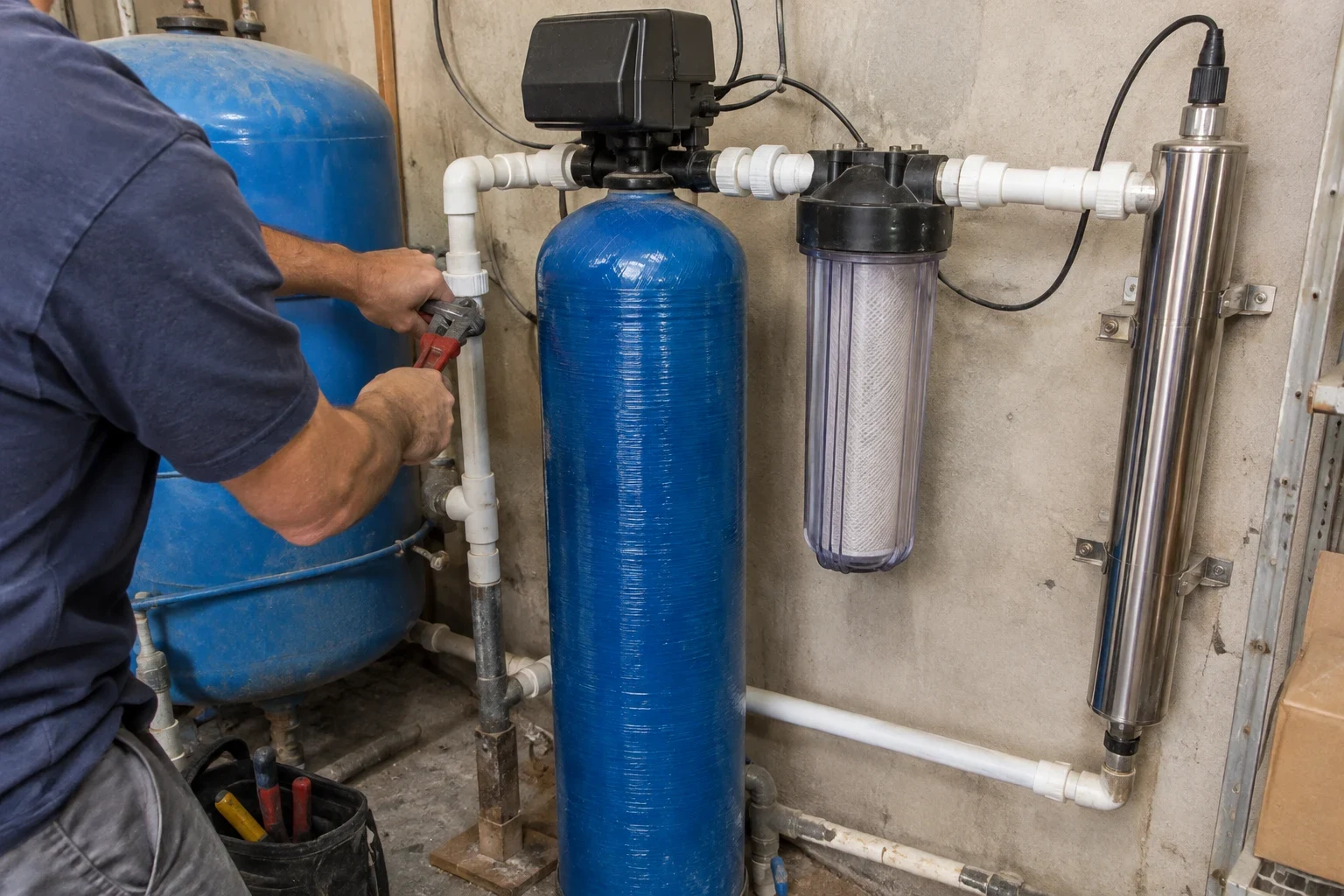
A private well brings its own sediment, iron and odor, and an older home adds aging pipe and earlier repairs. We fit well water filtration around both, so water reaches your taps clearer and the system stays easy to service for years.
Filtration built around the well you already have
Well water changes with the ground it passes through. Sand and silt, dissolved iron and manganese, and the rotten-egg smell of hydrogen sulfide are the usual complaints. A filter that suits one well can clog in weeks on another, so we start with what your water and your plumbing are actually doing.
Homes with some history make that more important. We often find a pressure tank from a previous owner, galvanized steel mixed with copper, or a patch where someone spliced in a part that no longer matches. We plan the filter's location and connections so it works with those pieces instead of straining them, and we tell you plainly when an old fitting should be replaced before anything new goes on.
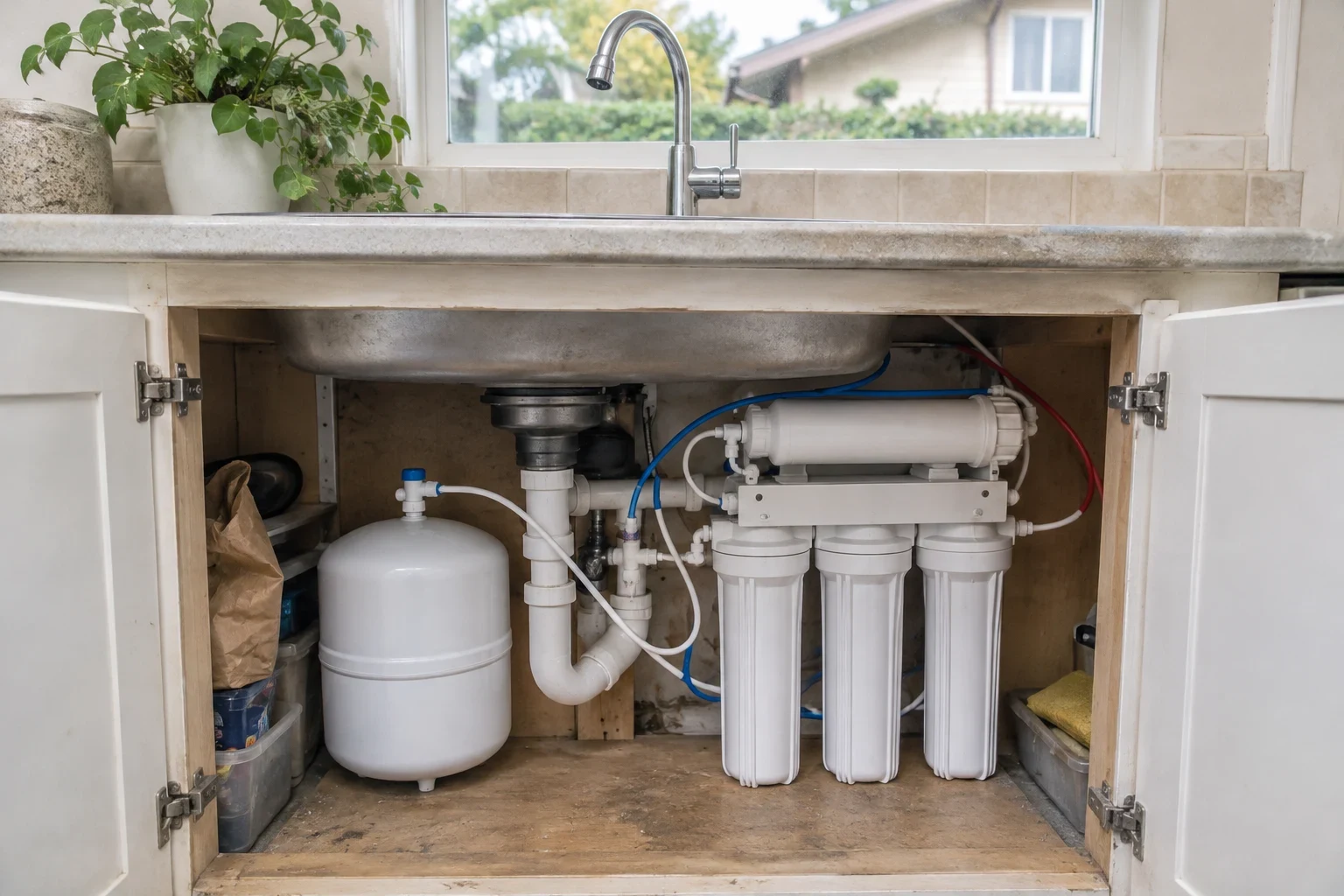
For drinking and cooking water, many households pair a well system with reverse osmosis at the kitchen sink. If your home is on a municipal supply instead, our city water filtration page is the better place to start.
What the work includes
A look at the whole water path
We trace the line from the wellhead and pressure tank to where it enters your home. That shows us where sediment builds, where old pipe has narrowed and where a filter can sit with room to service it.
Sediment and iron stages matched to your water
We size the filter media to the flow your well can deliver and to what the water carries. A heavy sediment load gets a prefilter so the main stage lasts.
Careful tie-in to aging pipe
Where new connections meet galvanized or worn copper, we use proper transition fittings to limit corrosion at the joint. Loose straps and tired valves near the install point are flagged before we cut in.
Bypass valve and clean mounting
Every system gets a bypass so water keeps flowing during a filter change. Housings are mounted level and secured, with lines run neatly along the wall.
A clear handover
Before we leave, we show you how to read the pressure gauges, when to change cartridges and how to use the bypass. You get the details in plain language, not a manual to decode.
Signs your well water needs filtering
Sand in the faucet tips
Unscrew a kitchen aerator and find grit inside, or notice the washing machine inlet keeps clogging, and you know sediment is traveling through the house. Left in place, it wears down valve seats and fixture cartridges.
Rust rings and dark streaks
Orange or brown marks in the toilet bowl and tub tend to trace back to iron. Gray or black streaking more often comes from manganese.
Hot water that smells of sulfur
A rotten-egg odor, usually stronger when the hot tap runs, is one of the most familiar well complaints. In most cases a properly chosen filter stage takes care of it.
Murky glasses after a storm
If water looks hazy after heavy rain or a long day of laundry, the well is likely drawing in fine particles that a filter can hold back.
Flow fading at worn fixtures
Weak pressure in a home with original pipe can mean scale and sediment have narrowed the line. Filtering where the water comes in stops fresh buildup from making it worse.
How a well filtration job runs
- 1
Start with a phone call
Describe how the water looks, smells and tastes, and share whatever you know about the well and any plumbing work done before you moved in. If a lab report from the last year or two exists, we read through it together.
- 2
We visit your equipment
We check the wellhead, pressure tank, entry point and the space available. You get a direct recommendation, including any aging parts we think deserve attention first.
- 3
Install day
We close the supply, put down floor and wall protection where we work, cut in the bypass and mount the system. Most homes go without water for only a portion of the day.
- 4
Flush, test the joints and hand over
New media is flushed, every connection is watched under pressure for leaks, and we confirm flow at your fixtures. After cleanup, we walk you through the routine upkeep.
What drives the price
The cost comes down to what is in your water and how the house is plumbed, so we walk you through the exact reasons once we have seen your setup. Installation is free because we cover it. We talk through the equipment and any repairs to old pipe openly before work starts.
- What your water carries
- Water with only sediment needs a simpler system than water carrying iron, manganese and sulfur at once. Every extra stage adds equipment.
- How much water flows and gets used
- A bigger household or a high-flow well calls for larger housings or media tanks so pressure does not sag.
- The state of your current plumbing
- Rusted galvanized pipe, a worn-out shutoff or a mismatched old repair close to the tie-in may have to be replaced first.
- Room to work and getting there
- A cramped crawlspace or pump house, or a long run to a usable wall, means more time and more materials.
Well water filtration questions
Something not covered here? (818) 836-8075
Does adding a filter cut the water pressure in the house?
Not much, when the housings and media match what your well can deliver. A noticeable drop usually traces back to equipment that is too small for the flow, or cartridges that stayed in long after they filled up. We size the system to your well and point out the gauges that tell you a change is due.
How long do the cartridges last?
It depends on how much sediment and iron your well sends through. One home may swap cartridges every few months while another goes much longer. We set a starting schedule at install, then adjust it once we see how quickly the first set loads up.
My house has old galvanized pipe. Is that a problem?
It is common in homes of that era, and we can work with it. We use transition fittings where new connections meet old steel. If a section is badly corroded, we tell you before we connect anything to it.
Can I add drinking water filtration as well?
Yes. Many well owners add reverse osmosis at the kitchen sink for drinking and cooking. The well filter keeps sediment away from the reverse osmosis membrane, which helps it last.
How long will we be without water?
Usually part of a day. We agree on the shutoff time with you in advance. Once the bypass valve is in place, later filter changes need almost no downtime.
Ready for clearer water from your well
Tell us about your well, your pressure tank and any past repairs you know of. We will talk it through and arrange a time to see your setup.